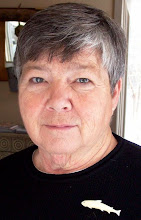
I haven't felt like writing about the Rochester art scene this year. Instead, I've been licking my wounds, feeling old and forgotten and ....all those feelings that get exactly no sympathy and no attention and therefore, I guess it's time to abandon that direction and look for some new strategy to (1) use my brain (2) use my experience and (3) use my time - but leave my $$$ out of it!
First, dear readers, as for one of my last blogs, I was dis-invited to participate at MAG on the Women's Council panel discussing art in the 21st century. Unfortunately, nobody remembered to tell me about the change of plans until the week before when I telephoned the program chairwoman to ask what time to show up and ... well, you can guess the embarrassing conversation from there. The panel, instead, was Ron Netsky (from Nazareth), Rebecca Rafferty (grad. of Nazareth and current art critic for City Newspaper. I wonder how that happened?) and Bleu Cease, director of RoCo. What goes on here? I feel a bit like a leper but I do remember getting Bleu Cease thoroughly angry about a slap-in-the-face review I wrote for City (before I was invited to leave there too!) And I did continue to tweek the nose of MAG (out of love! I keep wanting more, better, the best and keep getting mediocre, convenient, easy listening art.). Perhaps I went about it the wrong way and should not have done my criticism in a public forum. Oh well...water over the bridge (along with my news career!)
So where are we now? It seems to me that RoCo made some good decisions this year (the 6 X 6 show became not only a hugely successful fund raiser but equally good community builder. So why is this - the 2nd year - the last for this event ? Ask Bleu.)
MAG has a glass show up that needs some seriously thoughtful analysis but I'm not doing that now. Time is getting short and I need to take my puppies to puppy school. Instead, I'll send out this question: What's going on with this flap about ArtWalk? I need to be brought up to speed from people who know. Will you help? Can I? Shirley
Wednesday, June 17, 2009

Thursday, August 21, 2008
Sol LeWitt at MassMoCA
MassMoCA, the huge converted mill in North Adams, Mass., is preparing a retrospective exhibit of wall paintings by Sol LeWitt. An entire 27,000 square foot building will be dedicated to the show that opens November 16, 2008, and will be on view for the next 25 years. The exhibit is being installed with the blessing and co-sponsorship of the LeWitt Foundation and Yale University.
For any reader who doesn’t know, Sol LeWitt’s abstract wall drawings and paintings are applied directly to a pre-primed, specially prepared wall. And they are BIG! Dia Beacon, the factory-turned-gallery in Beacon, New York, designed to showcase works of art so big that other museums can’t accommodate them, has a wing full of LeWitt’s.
Also useful information: Sol LeWitt died last year at the age of 79.
So how is it that previously un-painted paintings are being installed at MassMoCA?
LeWitt “designed and graphed” these drawings/paintings on paper. When an art piece was purchased – or in the case of a museum or gallery show, put on exhibit – trained assistants with the help of apprentices transferred the graphed information (including explicit instructions for preparations) to the wall surfaces. Buyers were given a certificate to verify that the work was an “original” along with a copy of the certified graph to forward to any future buyer (in case they wanted to either sell the work or simply move it to another location.) LeWitt died leaving closets full of never installed works, among them the supersized pieces going up at MassMoCA.
One Rochester art collector owns a LeWitt wall pencil drawing. It is applied to a bedroom wall. Local artists supervised by a LeWitt foreman did the work. The final step – spraying a fixative so that the graphite drawing would be sealed against dirt and dust – was skipped at the request of the owner who preferred the very matt finish, pre-spray.
All went well and the finished piece is exquisite. Then the electrician and his helper came to install special lighting to enhance the piece. The helper inadvertently brushed up against the wall drawing and smudged the graphite in one spot. Rather than remove and redraw the entire piece, the owner decided to let well enough alone and add the smudge to the lore of the installed work.
The Japanese have a term – wabisabi – that means there is beauty in the imperfect. They would understand the owner’s decision.
Monday, July 14, 2008
MAG Biennial
I visited Memorial Art Gallery today to take in the 3rd Rochester Invitational Biennial and here is my assessment: it’s a 50/50 success.
I love Juan Perdiguero’s “dog paintings.” These things are huge – approx. 4 ft. by 6 ft. or bigger – painted in shades of black and brown against mostly stark white backgrounds. The dogs are super-realistic, nearly photographically real. But Mr. Perdiguero places his dogs in poses that turn them into abstract silhouettes. You can’t help seeing the volumes of field as part of the whole, a lot like Rothko’s black and white abstract paintings.
Sue Huggins Leopard’s printed books are truly works of poetry as well as art. Leopard has worked quietly in Rochester for years and the level of her printmaking skills and integrity of her art has matured steadily. It is entirely appropriate that her work is finally getting serious recognition by serious art curators. I would snatch up an edition of her illustrated Emily Dickenson poems in a New York minute if I had adequate room to display them. They are charming.
I am a push over for “trash art” – those objects created from the throwaway junk that we all contribute to landfills – and Ronald Gonzalez uses these materials in clever and refreshingly original sculpture. Each sculpture sports a “junk” head perched on skinny wire legs. They form an army standing on a narrow shelf that circles a room in the exhibit, one more unlikely and funnier than the last. As someone who recently came from the latest Pixar cartoon featuring a charismatic little robot named Wall-E, I would believe that his band of characters were all movie extras.
Melissa Sarat’s paintings are complex and exuberantly colorful and that is probably the most understated sentence I have ever written about anyone’s art. Each canvas is so covered in imagery, so intensely packed with color that I just can’t concentrate on them for more than a few seconds. My brain goes into over-load. I guess her paintings are good but this time, dear friends, you’ll need to have someone else to analyze them. I found myself closing my eyes to rest.
The bad news: since the beginning of photography, picture takers have been fascinated by reflected images - mountains reflected in a lake or airplanes mirrored against glass covered buildings (and isn’t that a scarily prescient image?). And of course people reflected in everything from car windows, mirrors of every dimension and yes, even television sets. The narrative is just too easy. Susan Lakin’s photographs of people reflected on television screens are – let’s face it – old news.
Todd McGrain’s bird prints and sculpture have been done too but it took me a while to figure out why I was vaguely bothered by this artwork when by every measure I thought I should really like it. After all, I like nature art and stark images and who besides my friend Boo doesn’t like birds? Then it came to me: I own a small soapstone carving that is nearly exactly like Mr. McGrain’s birds except mine was carved by an Inuit carver nearly 50 years ago. And come to think of it, the birds prints look a lot like Eskimo art too – nearly always drawn in pairs – and I can’t help wondering if this is premeditated by the artist or an unconscious borrowing.
Now for the big question about these invitationals: it’s great seeing work by unknowns but what about the old timers in our community? Are they excluded from consideration because they have familiar names? Or because the museum selection committee sees their work as “less fresh?” Why don’t we ask those questions?
Thursday, June 19, 2008
Gardens, another art form
I’ve known Linda (not her real name) for nearly thirty years. In all that time, she’s gained approximately four ounces while I have added another entire person where my waist once was. Nothing on her body sags and her dimples are still cute. She has maybe a half dozen gray hairs that form a chic swoosh at her temple while I am speeding past the “salt and pepper” stage straight into a blue tint job.
Did I mention that Linda is a talented artist with exquisite tastes and an adoring husband only too happy to bankroll her every whim? When I leave her house and come home to mine, I’m not sure whether to reach for a paint roller, a vacuum cleaner or a match. I begin by pushing a chair from one side of the room to another. My husband asks what’s gotten into me today and when will dinner be ready.
I am a college-educated woman. I ran a successful business and helped guide two children to adulthood. My husband of 45 years still loves me and I have the most adorable dog in the world (everybody says so). But there are some triggers – and people - that set off a seismic quake of inadequacy. It’s totally irrational but there it is.
Now that I’m retired, I’ve decided to become a respectable gardener. I buy a lot of books. Recently, I decided to join the National Garden Conservatory as well as my regional Civic Garden Club and tour everybody else’s gardens to (1) steal ideas and (2) steal more ideas. This was a major decision. I knew I was risking another “Linda” situation and my ego simply cannot handle more abuse.
In the past month, I’ve toured fifteen gardens reflecting an astoundingly diverse scope. One was no bigger than a small patio holding about a zillion planted pots while another covered fifty acres. Most were comfortably somewhere in between these extremes spreading over backyards that once sported only mown grass. One or two provided textural carpeting among mature trees, my favorite since that mimics my own growing universe. A few included vegetables among the flowers and shrubs and one was planted with hundreds of blooming tulips that visitors were invited to pick and take home as bouquets. And while I have ideas to steal, here are a few other pointers and impressions from my visits.
First, somebody has really sold the “backyard pond” idea in a big way and the design errors can fill a book. While I’m sure that the sound of trickling water is mesmerizing, rarely does a human construction match the real deal and certainly not in a bathtub sized pool surrounded by a necklace of matched rocks the size of my head.
Hostas win the prize as the hardest working plant oxen among gardeners everywhere regardless of growing conditions.
As a group, gardeners are the most generous souls alive. They will share every secret they’ve spent years cultivating and condensing - everything from plant and tool resources to growing information that only they and their grandmother previously knew. And after all the wealth of knowledge is passed along, they bend over with a trowel and dig out a small sample of the plant for you to try at home. I’ve just returned home from a tour of the Hudson Valley gardens with a bagful of geranium roots and a tub of euphorbia. I also learned that the beautiful cordovan colored plant that mysteriously came to my garden is perilla and that it’s edible. I have enough to feed citizens of a small country.
I’ve yet to meet a gardener who has a finished garden. The eighty-something year old man now confined to a wheelchair that we spent time with at his sprawling estate on Saturday was explaining his next major planting project. His helper was at his side but there was no question about who was the brain behind this nature extravaganza.
I’m home again and you know what? My garden looks pretty good!
I’m calling Linda to come on over for tea.
Sunday, May 25, 2008
City of the Arts?
According to City Newspaper, Joel Seligman, U of R President, Eastman School Dean Douglas Lowry and RPO director Christopher Seaman in a lovefest after receiving a substantial pot of money from Kodak to expand Eastman Theater, proclaimed Rochester “the city of the arts.”
YIPPEE!!!
I hate to sound so cynical but exactly which arts are we talking about here? Obviously, the Jazz Festival has found an audience and continues to gain support and three cheers for the founders of the Rochester Film Festival. My heart leaps whenever I see evidence of film students using our city and resources as background for their creativity. When students invest learning here, a part of them nearly always stays with us.
In no way am I belittling these achievements. In fact, with the world class music school smack in our downtown, we should have music coming off the rooftops and out of the very pores of the sidewalks and everyone in the city should weave this talent into daily events. I’m glad to see a classical music reporter contributing to the Democrat & Chronicle and a chunk of space for contemporary music set aside weekly in City.
As for film, Rochester has long been a “movie city” and maybe somebody else can explain why. My own theory is that we (universal “we”) use movies as escapist entertainment and maybe we here need more mindless diversion than the rest of the country. Winters are long. Mercury Opera has been a big disappointment. Friends no longer care about “gracious entertaining.” Museums (unless you’re under age ten) seem to be stuck in the past. What else is there to do on most Friday nights?
But - here it comes! - how about the visual arts? Where are we in this brave new world? We are a tattered lot, that’s what, so scared now of making any sound that we mostly hide in the suburban shadows. Oh, we tried fighting – more than once! We railed when funds were cut for airport art and we fought to keep Visual Studies alive and Eastman Museum from moving its collection out-of-town. Those were the glory days. Even then, getting the “art community” to form a collective voice was hard. Now it seems nearly impossible to elicit more than a nod of concern, a tut-tut-tut of sadness. I blame most of this on the absence of strong leadership.
Enter my personal ax to grind. The Monroe County Arts Council (what do they call themselves now?) has always been a bit (how shall we say?) anemic. I suppose because it’s always relied on the kindness of politicians for operating money, it’s never really taken on a big voice. (Judy Kaplan, director during the late 1980s, tried from time to time. She didn’t have the experience or the political moxie to pull anything off.) Her successor was worse. And the present director seems much more interested in seducing business money backing for the Council than driving an epee to the heart of art action.
For full disclosure, it is because of the current Arts Council that I no longer write art criticism for the Democrat & Chronicle. I slapped the wrist of the council for kowtowing to a commercial supporter. The director complained to the newspaper editor and I lost. (Talk about no political savvy!)
So, in a “city of the arts” we have very little support for the visual side of the equation, hardly any coverage from our major paper or other media and no strong visionary who asks that we soar to anything above eye level.
The glory days are over for us. The “city of the arts” has come about thirty years too late for us visual people.
Friday, May 16, 2008
Clocks, the Ticking Controversy
Wendell Castle railed (D&C, Apr. 23, 2008) about Midtown Plaza’s “Clock of Nations” occupying center stage at the Monroe County Airport during the next few years before it presumably finds a permanent home at the Gallisano Children’s Hospital at Strong. In his tirade, Castle calls the hometown artifact “kitschy junk,” unfortunate choices of words but understandable from Mr. Castle’s point of view. His own clock, after all, the very one that won a stiff art competition to occupy that space and for which the airlines and taxpayers paid $150,000, has been crated up and put into storage. Nobody seems exactly sure how long his piece will remain in its closet or why one large clock (his) is at risk during airport reconstruction but another (Midtown’s) can fit in so amicably.
Let me weigh in on the Clock of Nations. There are a few objects that define an era and the CofN is as 1960’s as Mary Quant black eyeliner, white go-go boots, and shag carpeting. It has it all – the same rounded edges that echoes the “house of the future,” the skinny stem of a Saariean table, the pure white of an egg chair. Regardless of whatever other sentimental images Rochestarians carry around in their heads, the CofN encapsulates a time and place in history.
Having established that the CofN has some value, the questions facing the community are what is to become of this iconic piece and who gets to decide? They are the very same questions that should be foremost in discussion surrounding Wendell’s clock for the very same reasons. First, these are pieces of sculpture that we tax payers actually bought and therefore, own. We don’t know their present worth. We don’t know their condition. If there is an orderly way for these decisions to be made (i.e. a Public Art Director or Public Art Commission), we don’t know about it. How is that committee formed and who serves?
The glaring fact is that the airport manager cannot make an arbitrary decision about placing art and displacing art that was purchased and placed by a duly appointed public committee formed for that purpose any more than the City can decide to give the Clock of Nations to a private hospital (even though ultimately, that may be the best place for it.)
Artwork needs moving sometimes. But our decision making process is seriously flawed and should not be left, helter skelter, to anybody who happens to come to work that day.
Shirley Dawson
6 Saddle Ridge Trail, Fairport, NY 14450
425--1639
Wednesday, April 30, 2008
Look Into the Future
Next November, Memorial Art Gallery is sponsoring a discussion on art in Rochester in the 21st Century. I’ve been invited to participate as a panelist and I need your help. I’m not particularly good at predicting the future so if readers out there have a line on this topic, will you please share that information with me? All I can really do is look at the 20th Century and try to weave together cause and effect that may prove helpful.
Undoubtedly, the single biggest influence here during the last century was Rochester Institute of Technology. When the School of American Crafts came to this campus in the 1950s, it brought an army of talented faculty and students who stayed in our community, exhibited and sold their art. The school’s fine arts, print and photography departments paired with the manufacturing technology already at work in Rochester created a marriage of art forms that gave a level of sophistication to visual arts here that few cities could match. Nearby, state colleges were booming and all added art departments. SUNY Brockport, for example, had an outstanding faculty and regularly graduated talented artists but such satellites always revolved around the RIT juggernaut.
Direct results? Shop One opened in the 1960s, one of the first fine craft shops in the U.S. Memorial Art Gallery’s annual juried exhibit had artists of the caliber of Frans Wildenhain, Wendell Castle and Albert Paley vying for entry space. Dean Johnson, head of the SAC program, taped a weekly television show on PBS in which he visited artists’ studios. He used his influence to convince area wide manufacturing and community leaders to commission and purchase art.
In the late 1970s, urban renewal was in full force in the City. The list of “bad decisions” associated with urban renewal is impressive but art influence was visible too. When the new Xerox Headquarters went up, it included a world-class art exhibition space. The Halprin-designed Manhattan Square was a coup. Architect Halprin had already designed Ghirardelli Square in San Francisco. The downtown waterfront was envisioned as a pedestrian walkway with serious art spotted along its bank.
The Gannett Newspaper Headquarters was designed to include major commissions from Rochester artists and that corporation purchased and installed a serious photography collection aided by the Eastman Museum curator. The City actually conducted a competition for artists’ designed street Christmas decorations!
By the early 1980s, there were at least a dozen commercial art galleries within the City. I opened Dawson Gallery in the Southwedge in 1982 next door to Zaner Gallery and a block away from Hoppers, Wildroot and Shaheen Raquesh Sculpture Gallery. On Park Avenue, the Wilson Gallery had recently closed but Oxford and 696 were still going strong. ArtWork at Sibley’s gave salesperson Roz Goldman her entry to the community and upstairs; the Ward Gallery generously provided exhibit space for all the regional art clubs as well as the annual Scholastic Art Show. Along Main Street, Barry Merritt opened The Gallery of Contemporary Metalsmithing. George Frederick was around the corner.
Except for Oxford Gallery, every one of these is gone. A few new galleries have opened; just as many have closed. Why? What’s made the difference?
I think the biggest catalyst was RIT’s withdrawal from the City both literally and figuratively. The new campus built on the outskirts of Henrietta removed students and faculty from any commitment or interaction with city life. It took some years to filter down but the change is nearly complete and now with a commercial “campus town” being erected, the disconnect is even more obvious.
Broader economic trends must be factored into the equation and Rochester’s economic health has steadily eroded over the past thirty years or more. Hardly any retail exists downtown and few corporations are expanding and building new art filled headquarters. Even when they are financially healthy, these companies emphasize social investment rather than cultural investment. No wonder! The demands of an expanding poor population with all the inherent problems are swamping our city, county and state.
Art, especially public art, became a political liability during the conservative upsurge of the last decade of the 20th century. This community has not recovered and may never on any appreciative scale.
Finally, young professionals are not staying in Upstate New York and their migration to hotter markets extends to the arts as well as other fields.
So my analysis: Rochester may limp along but will probably not be anything but artistically lukewarm for the foreseeable future. I hope somebody will argue against my premise. I’d like nothing more than to be persuaded that my insight is wrong.
Subscribe to:
Posts (Atom)