Friday, May 10, 2019

I BOUGHT A DRESS

Last year I bought a dress. 
I don’t buy dresses.  
I don’t wear dresses. 

Before this one, the last dress I bought was for my daughter’s wedding. She’s been married 24 years. 

I bought the “wedding dress” while on vacation in South Carolina. It was southern — filmy chiffon, rusty colored with flounces around the bottom — mint julep-y southern.  Never buy a dress while you’re on vacation. Vacation purchases are nearly always a mistake. I feel the same way about vacation artwork. When you get home, you spend days wondering if you lost your mind. The answer is obviously “yes." 

 The Tara Dress was on my body exactly 4 hours. Then it was relegated to a spare bedroom closet. We moved three times — three times the garment bag moved - unopened - with Scarlet O’Hara untouched. 

I finally sent the dress off to the consignment store. It got sold. Somebody else is wearing the flounces. I got a check for $22.00. All in all, a good trade. Consignment stores are better than catholic confessionals.  You get to erase the guilt and you get a refund at the end.

So, you rightly ask, why did I buy another dress? Because I’m old. Because I go to a lot of funerals these days. Because I looked in my closet and counted 14 pairs of black pants and wondered if I’d fallen into a rut. Because I discovered on line shopping! 

I like the newish dress and I’ve worn it three times already — once backwards. (That was a tiny mistake. The material is stretchy. Each section has a slightly different black and white print. It looked perfectly fine backwards! Except the pockets were pointed the wrong direction. I was at a funeral and reached for a tissue. That’s when I knew.)

Sue's Unique style
“Don’t pickle things.” I tripped over this sentence in the New York Times today. I love that sentence. It means don’t save the good china for “special.” Or the good undies. Or the dress. Life is short. You bought the dress so wear it. If you can’t bear to use the good china, give it away to somebody else. Your grandmother won’t care.

I’m taking seven pairs of black pants to the consignment store. Then I’m looking in the very back of every closet. Maybe some things just need some fresh air and new eyes.

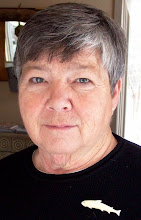
Here’s a picture of Sue. I’ve always admired her unique, individual style. I’ll bet she doesn’t own 14 pairs of black pants or a Tara chiffon dress. That hat? Leather jacket? She’s had as long as I’ve known her. She doesn’t pickle things.  I like that about Sue.


Monday, April 22, 2019

EASTER CONVERSATION

watercolor by Kyle Mort "Low Battery" (will work for food?)
Yesterday, sitting around an Easter dinner feast with friends, conversation steered to one of the all-time philosophical questions: You come into a pot of gold (millions of dollars? billions?). What will you do?

Sure, you go to your attorney, financial advisor, and spiritual leader for advice. Of course, you pay all your debts and set up safety nets for family members. And then?

What’s stopping you from doing all those things now…even if on a limited scale? Start again.

Schweinfurth Art Center in Auburn, New York, is an exquisite little architectural gem sitting nearly in the shadow of infamous Auburn State Prison. It’s named for a young (rich) man who died in 1931 leaving a bequest to build an art museum in his home town. The Art Center opened in 1981.

Schweinfurth is unpretentious. It doesn’t own a thing except the space where it sits. A small staff of fewer than half dozen women run the place. Nearly all their exhibitions feature New York artists except the annual prestigious national quilt exhibit. I haven’t seen a financial report. My guess is that the place “makes do” with a combination of funds: memberships, donations, a few grants, a modest endowment. 

Its existence is a gift, a “feel good” escape for stressed visitors. In my fantasy, this could be my “what next.”

"Continuum" by Russell Serrianne (very Victorian!), wild vine tendrils with clear shellac surface
Last week, the horror of watching Notre Dame burn, one of the world’s architectural treasures, unified France and the world in grief. Few events are big enough to achieve that these days. The last time? 9/11…and the U.S. was forever changed in ways that would astound former generations.

Immediately, pledges of millions of dollars began pouring into France to restore the 600 year old spire of Notre Dame and for an entire 24 hours, we thought “there is good will across the world after all.”

In a blink, protestors in Paris took up the cry “Wait! Money for a building but not for people? We are the working poor and we deserve attention.”  

There you have the age-old conundrum: Feed the physical or feed the spirit? 

Why must this be a choice? Isn’t it possible to take care of the physical needs of the world’s population with enough left over to enrich the spirit? The most insane thing I read last week was our President actually saying that our country “is full — no more room for immigrants.” That follows another official’s view that “solar energy will use up the sun” and “wind turbines cause cancer.” 

It’s the division that’s the problem — not the supply.

```````````````````````````````````````
The Svalbard Globle Seed Vault in Norway
Speaking of supply, there are 1700 seed banks in the world. These are repositories to insure against strains of plants becoming erased.  In past years, crops have died out due to blight, insect infestation, and climate change. Now, new crop diseases are increasing faster than world scientists can diagnose and stop infestations. Seed banks are life insurance policies meant to keep the human race from starving.

But seed banks themselves are always under threat. Several were looted for their plastic containers in Afghanistan. Others in Syria were destroyed by war and the typhoon that hit the Philippines destroyed another. Others have failed through lack of government funding.

(HUNGER, a novel by Elise Blackwell, describes a group of scientists who work in a seed bank in Leningrad during World War II. In 1941, Germany completely isolated Leningrad. People were without supplies for 900 days and resorted to eating bark stripped from trees, animals in the zoo and moss growing on rocks. Sex was traded for teaspoons of sugar and invaluable art treasures traded for cups of flour. The novel follows scientists faced with starvation or defending the seed bank there.)

In 2008, the Svalbard Global Seed Vault was officially opened in Norway. Cold and dryness are the required preservatives for seeds  and the Norwegian seed vault is located a mere stone’s throw from the northern most populated outpost on earth. It is deep within mountains surrounded by permafrost where the average temperature is -18%C.

But sometimes insurance policies fail. The earth is warming faster than anyone predicted and faster especially at the upper northern hemisphere. The permafrost is melting and water from melted ice has already entered the outer entrance to this fortress. Scientists are scrambling to shore up the entrance but how long can they bail? 

Nothing is a “sure bet.” 


Tuesday, April 9, 2019

EVERYTHING IS EVERYTHING

Robert Rauschenberg, The ¼ Mile (detail) 
“I remember rainbow-colored grease spots on the pavement after a rain.
I remember laundromats at night all lit up with nobody in them.
I remember Lois Lane. And Della Street.
I remember the sound of the ice cream man coming.
I remember movies in school about kids that drink and take drugs and then they have a car wreck and one girl gets killed.”

These are random quotes from Joe Brainard’s 167 page book “I Remember.” The entire book is written — one sentence after another — beginning with “I remember..” 

Last week, I took a writing workshop. The leader asked each of us to share our name and why we were there.  One woman said that she had worked for more than 20 years on her memoir.  She was determined to finish it. This class, she hoped, would give her a little shove to the finish line.

Wow!  The irony: life happened while she was trying to write her memories. The finish line? Isn’t that “death?” I didn’t have a copy of Brainard’s book with me at the time: I would have handed it to her.

Part of the installation at LA Mus. of Art
Robert Rauschenberg’s collage “The ¼ Mile” is installed at the Los Angeles Museum of Art through mid-June. It’s the first time this piece has been exhibited in its entirety. I’m checking out airlines and scheming: can I afford both the time and money to fly to LA? Do I have the stamina for such an adventure? (I’m not a particularly good traveler.)

The painting/collage is 190 panels with 3-D sculptures inserted along its length.  It represents 17 years of Rauschenberg’s life.  One critic described it as “ a self-contained retrospective.” 

Aha! A memoir!! 

(Rauschenberg said “There is no reason not to consider the world as one gigantic painting.”)

A few weeks back, I sent a message to a friend of mine. I wanted her to read my last blog posting. When I began the blog in 2008, I titled the site, “Rochester Art Review.” I’ve since wondered about changing the site name and wrote my friend “today’s blog has nothing whatever to do with Rochester or art!’

She wrote back “Everything is everything.”

If I could return to last Saturday morning, I maybe could help that one writer. Then again, maybe not. Process can be a form of meditation. Who’s to say if one method of reflection is superior to another? if one style of ‘memoir’ has more gravitas? for whom? 


There's "wallpaper" and then there's WALLPAPER! I added this "just because." 

Sunday, March 17, 2019

STORIES FROM THE 'HOOD

My woods
I am reading Annie Dillard and Mary Oliver — poem and prose writers inspired by nature. Their words drip with profundity in beautifully artistic ways. I want to be them — to observe the spiral of a hawk, disturbing the air enough to set off tornados worlds away from his and my suburban nesting ground — to discover a universe in frozen puddles and to rejoice at the pregnant budding of pre-spring apple saplings. 

I want to find meaning in the mundane. Instead, I’ve spent the winter watching Netflix.

A thaw arrived this week. For a few days, my neighbors were tricked into believing that winter is ending. We are easily fooled. But sure enough 97 year old Shirley who lives two doors over, stood on her back deck and fired off golf balls toward the woods. I looked up from lunch and there she was, using her 7 iron as a walking stick, wandering down the hillside in search of her balls.

I sent my husband out to help her. She likes him better than me. He’s tall. She likes to lean on him. Shirley told him that she’d recently been in the hospital but she couldn’t remember why and that she didn’t realize she’d walked so far away from her back deck and was now wondering how she’d ever get back home. Thank goodness he showed up!

Shirley doesn’t watch Netflix. She practices Chinese brush painting. And she drinks Vodka. I wonder if Dillard and Oliver drink Vodka?

Doug, next door to Shirley, taps and collects tree sap near winter’s end. In time honored practice, he boils the sap down in his outdoor “sugar shack” to make his very own syrup. Doug invites his church “men’s group” to a Saturday morning breakfast of campfire pancakes and fresh syrup. My husband goes too. The pancakes aren’t very good. 

There aren’t too many maple trees in our back woods so Doug taps a whole variety of trees. Boiling down sap to make syrup requires a lot of sap! He should host a “taste off.” Identify and compare the tree whose sap made which syrup. I have a friend whose neighbors plan a monthly wine tasting. Same thing.

Pancake Day is a full party day at Doug’s house. Late in the afternoon, his elderly parents arrived to share the fun. I wonder why they thought they could drive their Lincoln into the woods? The path back to the shack is narrow; wooded ravines fall off on both sides. The shack sits at the end of the path on its own small island pad. But there they went. 

Half way back, the Lincoln took a nose dive off the path and now its front end dangles over the edge of the ravine, back tires anchored in the muddy path. Tow trucks came and went — a sheriff or two. My husband went over to “look things over.” (It’s a “man thing.”) He suggested calling the fire department but Doug is pretty embarrassed. How to explain that a Lincoln is stranded in his woods? I mean…who would try such a thing? Maybe  they should consult Shirley. She’s been around the block a time or two. At least, she could give them all a shot of Vodka. 

It’s lunch time again: Day #2.  The car’s still there. I don’t know what became of the parents. Doug is still boiling tree sap. My life.


Wednesday, February 27, 2019

SILENT VOICES

THE LATE MRS. PERSIMMON (oil on linen, 30in.x26in.) 
Last week, Main Street Gallery in Clifton Springs opened a Robert Marx art show. The paintings assembled are all of a piece. In this work, ghostly skeletal shapes and pale funereal flowers dissolve into somber backgrounds. Two death masks stare back at viewers from gold leaf. 

Mr. Marx has painted a death sonnet.

Robert Marx celebrated his 90th birthday a few years ago.  Until then, he got out of bed every morning, dressed and drove to his studio several miles from home to work a full day. Two or three years ago, he moved his studio to the lower level of the home he shares with his wife, Francie. He still works a full day — every day — but (as the comedian said), the commute is shorter.

Until he retired, Bob taught art at the State University, Brockport campus. Before that, he taught at Syracuse University. His personal art iconography  became familiar throughout Upstate New York —portraits of needle nosed (mostly) unisex figures staring hollow-eyed from waxy backgrounds. He abandoned graphic color contrast choices early on in favor of grayed down, browned out, blackened shades to define clothing, accessories, and backgrounds. 

Robert Marx (artist statement)
Bob has enjoyed a respectable degree of acclaim. After more than half a century, people still want to purchase and live with his art. Those of us whose job it is to contemplate meaning in narrative art find his images challenging and fun to analyze. From an outsider’s view, his life looks satisfyingly full.

I asked Robert recently “Can you teach someone to be an artist?” He answered immediately: “No!”

I keep rewinding that conversation. He’s right, of course. Humans are problem solvers. It’s the problems that inspire our quest for solutions that send us down life paths: fireman, teacher, plumber, drummer. So we take classes or apprentice or experiment to find the solutions to those problems that capture our interest and our imagination. Any of us can learn art techniques. Does that make us “artists?” 

“Music is not in the notes but in the silence between them.” (Claude Debussy) 

I can play Ragtime on my piano as long as little black notes are placed on skinny music score lines…but I can’t play “ragtime.” I have no feel for it…I can’t improvise…I don’t know what “walking the base” even means. 

I enjoy playing the piano but I can’t label myself a “pianist.” “Solving the problems” of being really good at playing the piano required more work, more dedication, more totality than I was capable or willing to devote to the solutions. So it is a hobby.

Art is not a hobby for Robert Marx. He is an artist and after years of problem solving, understands the blank spaces — the silence between notes. 

At the gallery opening, me, Kathleen Leahy talking to ?, and Robert Marx


Saturday, February 2, 2019

LOOK! THERE ARE THE SHADOWS!

One of my Bill Stewart pieces, circa 1995
Bill Stewart is leaving town.  I will miss him.

I can’t pinpoint my introduction to Bill’s outrageous clay sculpture.  Maybe it was a 1970s Finger Lakes Exhibition at Memorial Art Gallery. 

Rochester was an art version of Alice’s Wonderland in those days. Chip and I, dragging our young daughters along, discovered Shop One on Troupe Street in the Corn Hill district of the City. Shop One began as the whim of faculty superstars from the School for American Crafts. It provided a place for them, their students and their friends to exhibit and sell what became history-making art pieces.

Three Crowns, nestled between the Erie Canal and factory buildings in Pittsford, was such an exquisite building that I wanted to live there — with or without its contents. Years later, I went searching for that building. It was gone — or so changed that I couldn’t recognize it — another sad day!

During the late 1970s and early 1980s, as many as two dozen independently owned art spaces existed in Rochester. Oxford Gallery on Park Avenue is the lone survivor. 

A recent essayist wrote that galleries “are the beating heart of the art world.”  They provide a mechanism through which artists’ works find routes into great collections, and along with marketing art, they nearly always serve an educational function. Gallerists research art markets, and publish books and often write essays for trade magazines.  Art galleries  provide a place to exchange ideas and in doing that, they automatically become builders of community. 

It’s dangerous to spend much time walking down memory lane — no side rails to keep you from falling off into the abyss! But there’s no denying: the giants that lived in Rochester and carved new territory in decorative arts  have died, retired, moved away, or closed studios. A significant era has ended  as surely as our industrial giants— Kodak, Xerox, Bausch and Lomb — now gasp on life support. 

A case might be made that artists’ studios and social media have replaced galleries in this era of self-promotion. But clinging to its glory days as an “art capital” is over-stating Rochester’s present status. We might as easily point to the growth of micro-breweries as proof of manufacturing health. 

I wish the best for Bill Stewart and his family. His unique art informed and delighted us. Now that he and his contemporaries have left the stage, we wait for the next act. 

But where is the stage?


Thursday, January 10, 2019

IT'S 2019!

Today is January 1, 2019, the last “teen” year I — and probably you — will ever know. I read that on facebook. Does it matter? Maybe. Add it to the growing list of other things I will never again experience. 

I expect I’ll never see elephants walking down Main Street in my town again. I did once. They walked from the train where the circus disembarked and ended their Main Street stroll at the auditorium where the Shriner’s Circus was setting up. They did not obey traffic lights. 

I will never again wear the Armani silk, size 8, suit hanging in the closet downstairs. I am no longer in the business world. Do business people still wear silk Armani suits? Even if the jacket has an amazingly cute Oriental collar and a Rockette lineup of buttons cutting through the  front? “Office casual” has taken over. I don’t know what that means.

THE CAR WE BOUGHT...ONLY WHITE
I will never buy another new car… as soon as we finish the negotiations to buy this one. It’s too hard. First, the cars all look exactly the same; it’s hard to remember which ones you test drove yesterday or last week. Every single car is apparently a prize winner. I’ve never heard of any of these prizes. No matter what amazing clearance sale is advertized, after all the discounting, the price comes out the same. 

There are places I will never visit again — the Liberty Bell, Old Faithful, Disneyland. 

I will never own a cat. That window has closed. I don’t much like cats. I read Ursula LeGuin’s last book “No Time to Waste” which I liked. She wrote a lot about her cat. It obviously brought her much pleasure and comfort. I was not persuaded. 

I refuse to invent New Year’s Resolutions ever again.  If I haven’t tackled it, tried it, tasted it or visited it by now, I never will and probably didn’t much care in the first place.

How to react to this new reality?  With some relief, some nostalgia and some sadness for the list must include “I will never create another garden.” And “I probably will never again breathe in the smell of a newborn baby.” Some things about growing old are unexpectedly blissful; others are heartbreakingly sad. 

The trick is to find grace in both.