Wednesday, February 24, 2016

A POSITIVE CASE FOR PUBLIC ART

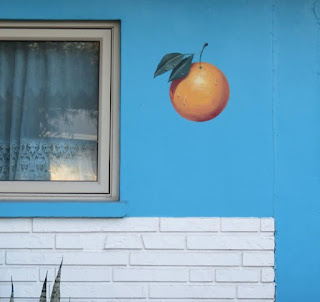
(Thank you, Elizabeth Agte. You went on vacation to Florida and posted on fb photographs that inspire this story.)

The small Gulf Coast town of Dunedin, Florida,  (population 35,300, 2010 census) sits just west of Tampa and is known for its Scottish roots which it celebrates in the annual Scottish Heritage Festival. More recently, it named itself “America’s Most Walkable City” but I don’t know how that was measured and against whom. Some might argue that 35,000 souls do not a city make!

Never mind.

Dunedin has a few other bragging points aside from the mere fact that it’s in the Sun Belt and has water access.  It’s the spring training grounds for the Toronto Blue Jays. It sits alongside the Orange Belt Railway. Built by a Russian immigrant in 1885, it was one of the first small gauge rail lines in the U.S. (a mere 3 feet wide) that ran from Sanford to St. Petersburg, a distance of 152 miles. The train line is no longer active but approx. 35 miles of the old bed now form a hiking/biking trail accessible to Dunedinians and visitors as part of the national “rail to trails” program.

Over the years, the town center miraculously resisted any attempt to “update” its commercial district.  No large commercial signs are allowed nor corporate franchise restaurants nor franchise retail stores. The result is an authentic town (usually labeled “quaint”), not the homogenized versions that plague our country from coast to coast. It also means that local commerce must be creative to keep “in the game.”

In 2009, two local residents - artists Steven Spathelf, age 52, and Marsha Goins, age 46, (Marsha also happened to own the Enchanted Branch, a flower/gift shop) decided that art could 1)distinguish the central commercial district, 2)provide unique promotion opportunity and 3)instill pride of place.   They picked oranges (no pun intended) as the shared symbol of their town, pre-scouted the area for smooth walls, invested $150 in paint and at 5 a.m., April 13, 2009, set about the business of painting foot high oranges on business walls. They planned to finish by 8 a.m., clean up and disappear from the scene without getting caught.

Obviously, that didn’t work. They were spotted by people coming to work. They were hugged, chatted with, laughed with and hugged again. No charges of violation were filled. Building owners that failed to get an orange?  See the sign posted by the Chamber of Commerce .

(Just reported: there are now over 350 "oranges" in Dunedin along with an orange parade.)


(Photographs: Elizabeth Agte and the Tampa News)

Saturday, February 6, 2016

Quilts and Golf

I’m feeling especially sad today.  First, I have a cold and then, it’s February and I live in the north. Even when it’s a record setting mild winter like this year, February is still gray and wan. (Can a month be “wan?”) Around me, issues seem wearying whereas - when I am feeling more optimistic - they are energizing sparks, mind puzzles to solve.

For instance, in the suburban community where I live, an off-shore conglomerate is selling it’s locally owned property. Ordinarily, this could be a boon to local citizens but in this case, the property is two nearly adjoining golf courses comprising a bit over 400 acres.  A giant stone quarry sits in the arm pit of these two parcels. The quarry is still being worked but can play out within a few short years when it will become a 200 acre lake fed via underground springs. 

Citizens - as we’ve long known - may SAY they want change but only for other people, never themselves, and if their house is adjacent to a golf course that’s suddenly up for grabs? Pure panic! Meetings are called, people beat a path to the town hall, and armies are enlisted to print and pass along flyers, post lawn signs.

But golf courses are a dying business.  Growth has been flat for decades; golf courses - both private and public - are in trouble nearly everywhere.  Rounds played nationally are down 10 - 20% since 2009.  The National Golf Foundation reports that the game is down 5 million players in the last 10 years and 20% more players are likely to quit in the next few years.

At the other end, fewer younger players are coming onto greens.  The hot demographic - those players between 29 and 49 years old - have very little time to devote to 18 holes of golf and they generally have no extra money for golf trips where time becomes a non-issue.  The game is “too hard” for younger players to feel they can master - and they have a full menu of other activities anyway - and women remain poor beggers at the gate of most golf clubs.  And as if all this isn’t a stacked anti-golf deck, environmentally, golf courses are not very friendly. They are terrible water guzzlers and all those chemicals that keep the grass green filter directly to the water table. 

The perfect solution for my little suburb? I don’t know but it’s out there and I hope political leaders and citizens have the sense and will to find a compromise that elevates the quality of life for everybody, not just a few who happens to have back yards smooching the 9th green.

`````````````````````````````

Pat Pauly
I love quilts. Here are some of my favorites.  Pat Pauly is well-known for taking the quilt into print making/painting/patching arcs of originality.  But here’s a photograph that she posted on Facebook of a new quilt and it’s actually pieced and patched and top stitched and I like it very much.

Season Evans Community Quilt
Season Evans (don’t you swoon at that name?) is new to me but this Community Quilt is brilliant! Go to her website and look at these jewels. The backs are also pieced and quilted in totally unique patterns (and more traditional) from the front -  both sides are “finished art.”

Washington, D.C. foreclosure quilt

Kathryn Clark remains an artist whose work is cerebral and socially relevant as well as interesting to look at.  As soon as I saw her foreclosure quilts, I knew she had that mysterious combination that comes along rarely and I was delighted that the Smithsonian Museum agreed and purchased one of her pieces this year for the Renwick permanent collection.

Denise Schmidt
Denyse Schmidt has found a route that combines art pieces and commercial venture.  She sells quilt designs  - and the material to reach the end results - and teaches classes and writes books and…you get the idea. Therefore, among purist, she sometimes gets one of “those looks.” But I love her sense of graphic design and minimalism.

So here are my picks. The world of quilt making is vast. Make your own list and MAKE YOUR OWN QUILT! (Before golf season starts…)


Friday, January 15, 2016

WINTER WAXING

Kathryn Bevier paints with wax. The process is called encaustic and usually is done by melting beeswax, adding dry pigments to form a “paste” which can then be poured or “iced” over wood - sometimes, canvas - using various tools (i.e. palette knives.)  The process dates from about 1 Century B.C. and was found in Roman excavations and Egytian tombs.

These days, what with heat lamps and all, the waxy colorant can be kept vicuous and therefore, worked longer.  Also, because as it hardens, it develops volumn, it can be used almost as something between paint and sculpture - a depth not unlike tooth paste.

Why go through all this? I’m not a painter but I can guess that 1) it’s the challenge of conquering an ancient art form and 2) the surface is different from straight on paint.  Does that make it better? No…but different. And clearly, 3) the images last centuries, perhaps longer than paint mixed with more contemporary mediums (i.e. linseed oil.)

Kathryn Bevier, encaustic 
Kathryn’s paintings are installed in the second floor downtown Legacy Building,  formerly the Bausch & Lomb World Headquarters. 
(An interesting side-barr story:  Rochester tax payers invested truck loads of money to build that building during the late 1990’s to “keep the world headquarters in our city” but B&L was sold lock, stock and headquarters to … somebody… a few years ago. We tax payers got no repayment when the sale went through. I guess gambling millions on a world headquarters is risky business.)

So bottom line: go see Kathryn’s exhibit and look at encaustic painting.  She also gives classes. But go during business hours Monday through Friday. The building is locked up during the week end. (The trade off for tax $$$ investment was a “winter garden,” to be open all the time for all Rochester.  I guess that part of the contract didn’t make it into the headquarters’ sale either. The fine print….leaves taxpayers holding oh, so many empty bags.)

````````````````````````````````````````````````

Winter finally arrived here in Upstate New York. For gardeners (or dreamers!), now is when we  fantasize SPRING ACTIVITY!  I found two images that I will request from my chief gardener (that would be my husband, Chip.) We already have the stock tank/ bird bath/pond but it doesn’t look as neat as the one in this picture. The secret: the owners replant every year.

We already have trees planted in a “faux orchard” but I like that this one is scoured of any other plant life.  Obviously, the large stone sculpture is gorgeous! I’m not sure we can pull that one off but  I’m planning a way to wood chip the orchard island (Chip calls this my “scorched earth ”  landscape style.)  I’ll post pictures mid-summer.

``````````````````````````
A tiny plug for the Rochester Civic Garden Center:  Tom (Keenan), alias The Backroads Traveler, is presenting a photographic tour of the Wall/Therapy mural project on Thursday, March 24, 7 - 8:30 (5 Castle Park).

Many of you know that I truly dislike the mural project and have little good to say about it EXCEPT Tom LOVES the mural project and he’s an  interesting person, an animated speaker and a really good photographer.  I’m sure the hour will be fun and funny and well spent.


Monday, January 4, 2016

HAPPY 2016

I am a sucker for lists - the ones that crop up this time of year:  The 10 Best Novels, The 10 Newest Color Trends, etc.  I stop and read them all, mentally underlining - nodding agreement to some and scoffing at others. 

I can’t remember ever starting such a list but here goes:

10  AESTHETICALLY GRATIFYING EXPERIENCES OF 2015

  1. THE CULTURAL LANDSCAPE FOUNDATION is a non-profit group whose challenge is to make the public see, understand and value landscape architecture. In May, Chip and I joined the group of mostly professional landscape people to tour the Willistown Country Estate in Chester Co., Pennsylvania, and listen to both the property owner and chief landscape designer. This was an example of grand scale artistry and environmental husbandry.  I cheer both done well.


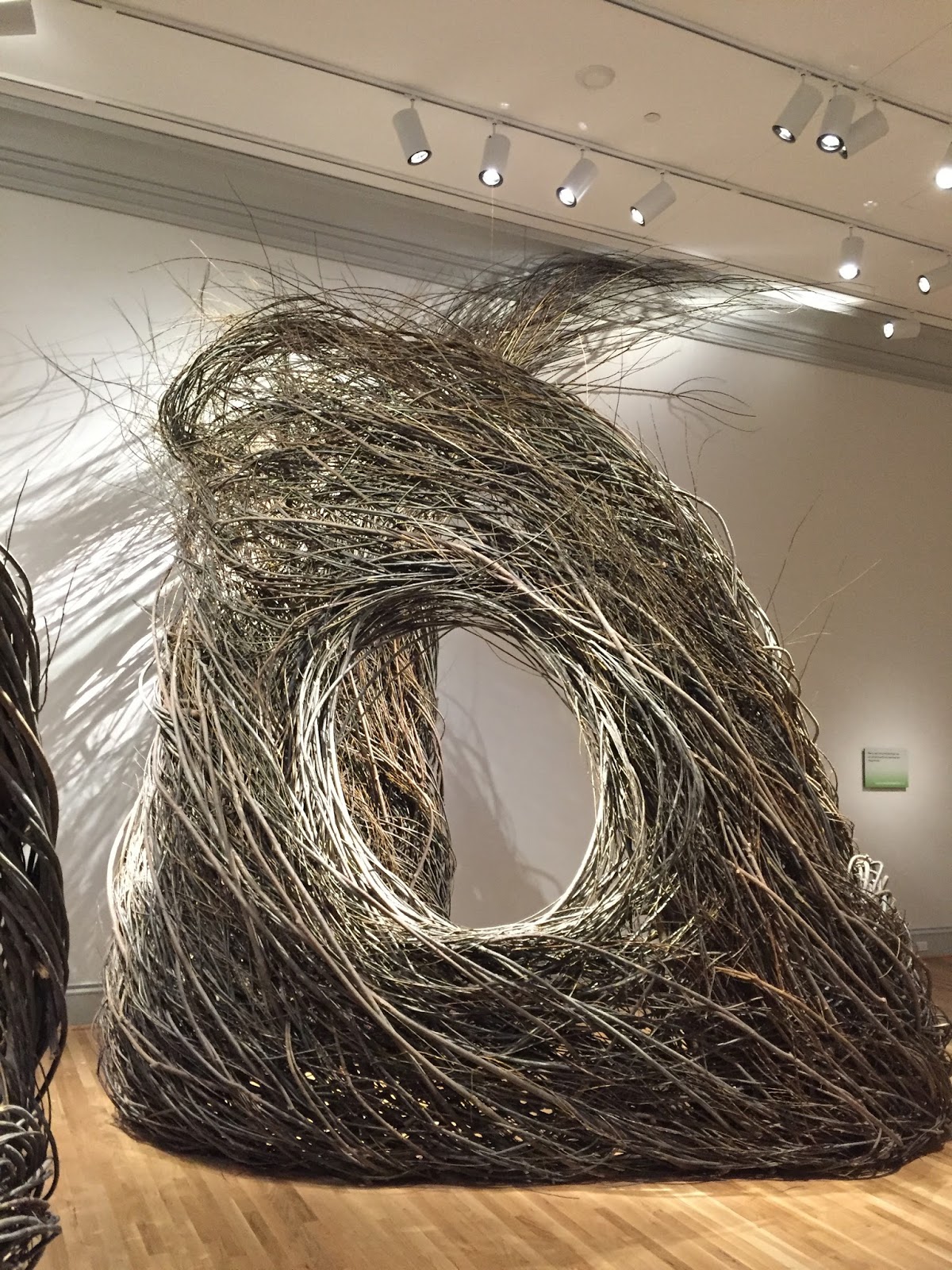
2) WORKING WITH PATRICK DOUGHERTY ON HIS STICK SCULPTURE in Hillsboro, North Carolina. I love that this entire effort was the result of one 70 year old woman who raised the $26,000 and got the “ducks in a row” to pull this venture off. I love that the site was smack in the middle of little historic Hillsboro right off a pathway used daily by every age, and that the entire structure begins to revert to nature from the instant of construction, underscoring that art does not need to be a “forever” addition to our already chaotic environment. (The photograph is part of Doughtery's installation in the Renwick Museum.)

3) FINDING THE WORLD’S SMALLEST CHAPEL in nearby Oneida, New York.
 Nothing fancy here…just a little white building on a scum covered pond built by a father and son -  an example once again of “the triumph of individual thinking.”
4) BEEKMAN 1802 in tiny Sharon Springs, New York, is a shop that would be at home on a street in SoHo or London or Milan.  That it exists in this magically haunted off-the-beaten-path town is a miracle. Actually, it’s due to the hard work of its two owners, one who is in advertising in New York City (and commutes home to the farm) and his partner, a doctor who was once the medical advisor to Martha Stewart publications.  I’ve stopped in here three times over the past few years and each time I’ve marveled that it stays afloat and that it continues to expand and present such style! 

5) IN JANUARY, NINA GABY MADE A GUEST APPEARANCE AT MY HOUSE to introduce her new book to a few of my friends. During the 1970’s, Nina made and exhibited beautiful little handbuilt porcelain pieces; they looked like they fluttered off the pages of Adventures of Aladdin.  Then she disappeared - left art and became a nurse - left Rochester for Vermont! Through  Facebook, I was re-introduced to the older, wiser and multi-talented Nina. WHAT STYLE!  This woman has found her unique self; there is no confusing her with anybody else I know. Clearly, she doesn’t shop at Talbot’s (not that there’s anything wrong with that) or Macy’s. She is not to be pigeon holed by age or fad. She’s consistent and confident, a terrific roll model for younger - and older! - women.
This is a wonderfully restored sculpture by the folk artist Vollis Simpson (Wilson, N.C.) And this is a Christmas light display a few miles from my house. Both awesome....Ready for the follow-up list of favorite things. And of course, Clyde's house below.


O.K., I’ve listed only 5 but a pattern has emerged, don’t you think? Individual creativity and courage to “follow your bliss” as Joseph Campbell kept preaching. Know thyself……..Small delights.  Is that part of aging? I don’t need the grand gestures but want more and more surprised smiles.


Happy 2016 everybody.

Monday, December 14, 2015

CHUTNEY


When I turned 70, I cried for a year.  Finally I got to be 71and felt much better.
``````````````````````````

“It is essential that we be convinced of the goodness of human nature and we must act as though people are good.”  John Cage

(Who in hell is John Cage anyway? But I like this quote…especially now.) 
``````````````````````````

RISK DELIGHT!
`````````````````````````

Andy Goldsworthy and Patrick Dougherty: both are artists whose art is a “celebration of human collaboration with nature.” I don’t know where that quote came from but I’ve used it a few times. It’s so grounded! 
`````````````````````````

“Sacred Spaces” is a term hardly ever used by us secular folks but it has popped before my face in unlikely ways during the past week and so I must pay attention. 

First, like always, I look up definitions and they’re a little elastic. One source says that a sacred space must be”… DEFINED - distinguished from other spaces - dedicated to a sacred (holy) purpose; a place for reverence.”  Hmmmm…this sounds like a platform for building yet another church/temple/cathedral/mosque with tag line “so send us your $$$.” Still, I suppose that culturally, societies must have such labels.

Joseph Campbell wrote that everyone should have a personal space where time, telephone, family and friends can be ignored - a place for meditation where ideas can hatch and thoughts can rule uncensored, his version of a sacred space. He called this your “bliss station.” 

Edmund DeWaal is an artist and writer.  He works with porcelain and makes pure white, imperfect objects - plates, vases, bowls.  Somehow he marries the technical properties of porcelain object making with the imperfect nature of nature itself; he celebrates the wabi sabi of art. After throwing one vase he said “It looks like a kid could have made it - it’s that good.”

(Are we back to Goldsworthy and Doughtery and that celebration of nature thing?)

Anyway, in a really good interview with DeWaal published in the New York Times Magazine (November, 2015), DeWaal talks about looking at a vessel (bowl or vase or something) and crawling - metaphorically -  inside to find  a sacred space.  

I am left wondering where my bliss station is and begin a mental list of possibilities:  the garden, my tiny desk, once upon a time the workshop but not so much now. 

Guess what? It doesn’t matter!  Like a snail, I think we carry our bliss station on our backs. It surrounds us like flannel pajamas, our personal cathedral. At any instant, we can be brought to our knees by some ridiculous outburst of nature, or insanely beautiful piece of art, literature, music. I just mostly need to stop crying and pay attention. 

CHUTNEY:
I chop up whatever fruit I happen to have (apples, pears, peaches - 3 -5 )
Sautee a little minced garlic and chopped onion in olive oil (I start EVERYTHING this way)
Put in the fruit and throw in handfuls of raisins, dried cranberry, chopped walnuts
Balsamic vinegar….honey…..a little sugar…lots of cinnamon…curry….nutmeg….(I’m not too specific about amounts)
Cook the whole mess together (fruit should be soft) and serve with any meat. Bonus:  It makes your whole house smell good AND it convinces people that you really can cook!

Happy Holidays!


Wednesday, December 2, 2015

A SITE TO BEHOLD

Thanksgiving has ended for another year and I have some of Aunt Glenn’s cranberry relish left over. It’s in two small containers hidden in the refrigerator.  Aunt Glenn’s cranberry relish marks the beginning of the Holiday Season in our household and when it’s gone, I miss her all over again. Isn’t that odd? For all the years that we exchanged Christmas gifts, all the times we met half way for picnics, the truck loads of ham sandwiches shared on week end afternoons (and the Manhattans served - “two cherries please” ), it’s the cranberry relish that brings her back to me full-blown and re-opens the wound left when she died. 

I’ve shared the cranberry relish recipe with any number of people and I make sure it’s always titled “Aunt Glenn’s Cranberry Relish.” Is this “ever lasting life?” Maybe. I can’t think of anything much better.

````````````````````````

Dedication of “A Site To Behold,” the twig sculpture built in Hillsborough, North Carolina by artist Patrick Doughtery with help from volunteers (including Chip and me!) was November 21.  I did not attend but enjoy watching the video of same title (go to youtube to view).

The question I get asked about the project:  how did I happen to know about it and become an afternoon volunteer?  Simple…the power of the internet.

We planned a trip to Beaufort, SOUTH Carolina, to tour Auldbrass, the Frank Lloyd Wright designed estate and so I cruised around web sites looking for “other events of interest” during the week or so we planned to be down south.  Up popped the project listed on the Hillsborough Arts Council web site with a call for donations and volunteers. I sent in a small check and showed up with Chip, clippers and garden gloves for a half day’s work mid-way into the two week construction.

By the time we arrived, mountains of limbs and cut saplings were piled around a clearing in the wooded park just off a public boardwalk. The day before, using augers, 2 ft. deep holes were dug as “footers” for bundles of larger structural uprights and kept erect by tamping gravel around the bases of each 20 ft. tall bundle.

As Chip and I stripped leaves off more limbs, Doughtery and others were putting in place five platforms held up by scaffolding. These were strategically placed to give him and other “weavers” access to the structure.

Doughtery works constantly himself and directs construction in a soft southern voice. He’s a tall, white haired man who looks mostly like an outdoors’ builder.  He brought to this project one salaried assistant, a woman probably in her late-20s. All other workers - about fifteen the day we worked - were volunteers. The sculpture is in a very public spot; the park is smack in the middle of small Hillsborough and foot traffic is constant on the meandering boardwalk that passes not 20 feet from the base of the twig building. 


It’s easy to write about this art work, it’s poetry and relevance to the world in which we live. It’s appeal bridges the youngest explorers running through and around the giant “birds’ nests” to the more intellectual who see the work as commentary on the transitory nature of the environment. Some of us find ourselves more philosophical these days and rejoice in human collaboration with nature. Count me among them....all!


Sunday, November 15, 2015

PLACEMAKING

Bynum, North Carolina cannot be called a city - hardly even a town! Bynum is about 10 miles south of Chapel Hill.  There’s a church in Bynum and a general store. The population?  About 300.  It’s where Clyde Jones lives.

Clyde is 73 years old and worked in a saw mill which accounts for his missing finger.  In his spare time he began constructing animals - “critters” he calls them - out of post sized logs. These logs are not whittled, chain sawed or otherwise messed with. They are quickly nailed together into big-eared dogs, long-necked giraffes and strange composite alien animals - a human once in awhile.  Some have baseball eyes and plastic flower noses and others, real horse saddles or any part thereof.  All are painted and most are dusted in glitter.  Clyde likes glitter. 

Once, you could hardly walk through the zoo in Clyde’s yard. So he began “loaning” animals to all his neighbors. Now nearly every one of the 75 or so houses in Bynum has at least one animal in its garden; the loanees must agree not to sell any of the menagerie. And since wooden animals are everywhere, the traffic signs are also hand-made wood - cut outs of turtles, painted with spots and stripes with words like “Drive Like a Turtle.”  (I don't know for sure if Clyde made the signs.)

It’s easy to find the house where Clyde lives. It’s the one that’s covered in painted flowers and animals. Even the chimney - even the roof! - sports flying fish, snaky eels, and wingless birds.  One whole side of his house is covered in a painted pod of whales, a sight seldom seen anywhere near Bynum. The porch is papered with letters and post cards from admirers and magazine and newspaper articles all about Clyde. 

Clyde is famous.

As recently as the late 1970s Clyde’s form of art was a big head scratcher. Academics hardly knew what to label these people who were formally untrained but created raw, spontaneous  paintings and objects. In 1980, the Corcoran Gallery curated and installed the seminal exhibit “Black Folk Art in American: 1930 - 1980.”  It was followed by a string of thoughtfully curated exhibitions in university galleries and museums like the American Folk Art Museum and the Smithsonian Institute.

Jones’ “Haw Creek Critters” have been exhibited in these and other venues all over the world. But he still gets a kick out of visitors driving off the main highway to find him and while he can’t walk around so well anymore, he’s often outside on his only luxury: a customized riding lawn mower festooned with plastic snakes.
````````````````````````````````````````

THE REST OF THE STORY    Clearly, Bynum, North Carolina is far from being a tourist mecca but it’s curious that the state has now widened and improved the roads leading to Bynum and the little crossroads that barely had a name, is clearly marked on maps leading out of N.C.’s Research Triangle.  I call this the power of Art in Placemaking.

ONE SIDE OF CLYDE'S HOUSE

A NEIGHBOR

ANOTHER NEIGHBOR - AND MOST OF THE ANIMALS  ARE 'LIGHTED'

THE FRONT OF CLYDE'S HOUSE

IN CASE YOU MISS HIM, THAT'S SANTA IN THE CANOE