Saturday, August 8, 2015

A Little Late Night Musing (And By the Way, I Hope Elaine Is a Good Sport.)

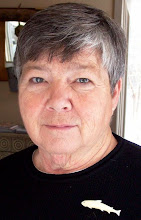
This is a photograph of Elaine Lennox. I’m not too sure that I know her but somehow we must be “facebook friends” because I open facebook and there she is with photographs of herself smiling in front of all kinds of backgrounds. Sometimes she’s with other smiling people. 

Below her pictures, friends write little messages to Elaine and I don’t seem to know any of these people either; they write about things and places and all I can do is shrug my shoulders.  This happens to me a lot on facebook. 

One of her facebook friends asks if this picture was taken in Cleveland. Why? I know that Elaine lives in Rochester but does she spend a lot of time in Cleveland? Or did she take a trip there recently? Good lord, I hope it wasn’t health related!  You know, Cleveland Clinic and all. Poor Elaine.   

Maybe Elaine has relatives who live there…grandchildren even. I have a real live friend who has grandchildren in Cleveland that she visits all the time but she never posts interesting pictures of anything on facebook - not even pictures of her grandchildren and certainly no pictures of herself even if she did happen to stand in front of a wall covered in writing.

But maybe my friend hasn’t come across THIS wall yet.This happens to be a way cool wall. This is what we could call an inter-active wall because who wouldn’t want to add to the sentence “I want to…”

How cool would it be to take time-lapse photographs of this wall as it fills with all kinds of writing? Or even better, hide in a bush and if a little kid writes “….go to the zoo” (for instance), you could jump out of the bush and say “This is your lucky day! I’m taking you to the zoo!” 

Or maybe rich people in the community could take turns making wishes come true from the wall but somebody else would need to hide in the bushes. I’m pretty sure rich people wouldn't want to do that part.  So you’d need a hidden camera somewhere; these things could be worked out.

Before we go any further with this wall thing, there’s bound to be somebody who said “what do we do about INAPPROPRIATE writing on the wall?” to which I think you just need to retort (don’t you love “retort?”) “There’s ALREADY inappropriate things written on walls in this city…maybe in this very neighborhood. Don’t sweat it.” 

(Unless what’s written is violent in which case it’ll all be on camera and the police can grab the miserable bastard but I hope they don't shoot the person. People are getting shot for less you know.) 

The bigger problem: where do you keep the chalk?

If I ever meet Elaine Lennox, first I’ll say “I hope you’re feeling better.” Then I’ll ask her did she write something on the wall?  


Maybe she can tell me where they kept the chalk.

Tuesday, July 28, 2015

TRASH

History is written in trash. Somebody somewhere is always digging up something that opens new rounds of discussion: who were these people? what went on here? why? what? who? where? when?  We are endlessly fascinated by…ourselves. That, after all, is the seed of the real question. Why am I here? What role am I supposed to play? How do I know if I’m doing it right? What is RIGHT? What happens to me at the end? Will I matter?
.
Finding a few bones and shards of pottery? Answers? Hardly!  I can’t imagine a single thing that I leave behind that will enlighten anybody hoping to fill in the blanks of my story…except words. Is that why I write? Yes. It really is as simple as that. I write because I want somebody else to know that I loved to watch birds, that I find pure magic in unexpected beauty manmade or otherwise, that “numinous” is my favorite word, and when I come back to earth for a second go-round, if I’m not a nightclub chanteuse I will be completely pissed off. 

Meanwhile, about that trash.  The burden of being a rich nation is that we have it…and need to hide it somewhere. Fort Bragg, California, decided to designate part of their ocean beachfront as “The Dump.” It was 1906, long before ocean beachfront was measured in dollar sign per foot. 

By 1943, Site #1 was filled. Onward to Site #2 (1943-1949)  and Site #3. The whole place was finally shut down before 1970. Much of the bulk had biodegraded by then. Metal was sold for scrap or to those nutty artists. What remained was glass, glass that was tumbled smooth by ever-present ocean waves.

By 1998, the beaches were made up nearly entirely by glass and the private owner decided Glass Beach should belong to the State of California and sold all 38 acres through the California Coastal Conservancy.

1000 to 12,000 visitors stop by daily to admire Glass Beach.  Some come with buckets to take sea glass away but that’s become illegal so don’t do it. Regardless, the glass is disappearing.  Those waves keep breaking the trash down into tiny bits of….sand. 


Hmmm…

Friday, July 3, 2015

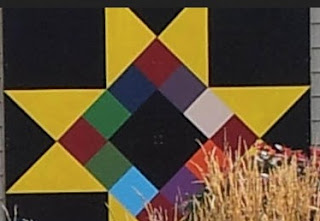
PS - BARN QUILT SIGNS

This will be brief!

I bought my MDO at Rochester Lumber. Now to cut it into 3 ft. squares, the size I think best for my barn.

Next comes exterior primer on ALL SIDES INCLUDING EDGES.

Finally, deciding and painting the design in exterior paint. Since my barn was part of a dairy farm in the 1800's, I'm thinking "cows."

If you looked at the map of New York, you noticed that Monroe County does NOT have a "barn quilt trail" and it seems to me that should be "fixed."  Initiating a barn quilt trail program is actually pretty easy, does not require the art council to put $$$ upfront and is a terrific "attention getter" for both the art councils and tourist bureaus...with or without additional investment in marketing.

I sent an email to the Monroe County Arts and Culture Council to suggest the above....no response. If ANYBODY OUT THERE IS READING THIS, perhaps you could follow up? After all, don't we all need another quilt in our dull Upstate winters?

Monday, June 29, 2015

THE (barn) QUILT TRAIL

Donna Sue Groves wanted to surprise and honor her mother, Maxine. Maxine was an avid and somewhat well-known quilter so Donna Sue decided to paint a large quilt square on wood and install it on the family barn.  The family barn - and family - resided in Adams County, Ohio, and this was 2001. It was also the beginning of a “Quilt Trail” with tributaries now in 43 United States and 2 Canadian Provinces.

Decorating barns is not new. Barns mostly were unpainted until the mid-1800’s. By 1850, paint was affordable and easy to come by and Pa. Dutch had a heritage of painting on just about everything! It didn’t take a huge leap from painting red barns to jazzing them up with a big ol’ garnishes that came to be called “hex signs.” 

Hex signs were generally stars, triangles and flowers inside circles and there’s a bunch of theory as to their meanings, most commonly something about superstition, but those theories are all merely guesswork.  

Two important things happened to set them in front of the american folk art eye: Pennsylvania Dutch farms were/are among the tidiest communities in our Country . They are simply beautiful and happened to be set among the rolling hills of Pennsylvania, itself a lovely part of our nation. These communities were stamped with every attribute we associate with agricultural/societal perfection and populated by equally perfect people: clean, self-reliant, creative, nurturing, and successful but humble. The combination made this a microcosm so foreign to the rest of us (Disneyland hadn’t been invented yet) that it became a tourist destination and wham-o!, (2) an enterprising speculator started selling hex signs as souvenirs.

I first came across Quilt Trails in North Carolina and jumped to the obvious (and wrong!) conclusion that North Carolinians were especially clever when it comes to crafts and how to market them. We began seeing squares on barns when we visited Penland. N.C. still holds a special place in my estimation; you can actually pick up tourist maps at any N.C. visitor center to follow barn trails. Digging a little further, I came across a web site for Ontario, Canada, where they hold workshops where you can design and paint your own squares and spares for people who agree to install but don’t want the dirty work.

Here’s a map of New York with counties that have quilt trails.  Just like us Yankees, however, nobody seems to know how to put it all together in a tourist package deal. Here’s another site that describes the mechanics of the whole enterprise.  


Or you can join me some summer day when I plan to paint my own barn quilt square.


Friday, June 12, 2015

MEMORIES OF WILLIAM CHRISTENBERRY


I walked into a large chalky white room with high ceilings, bare floors. The room itself seemed oddly vacant but for a smattering of little buildings about the sizes of most doll houses - maybe slightly smaller scale. The models sat on tables and pedestals only slightly higher than my waist. As expected in any museum, these objects were perfectly spotlighted from overhead; after all, this was the Museum of Modern Art. 

These obsessively detailed pieces of architecture were miniaturized churches, gas stations, general stores and fruit stands. They embodied life in the American south - or perhaps any part of America’s poor backroads communities where stores sold Nehi Grape soda and signs outside churches announced “Special prayer meeting tonite for Sister Grace.” 

Roofs more often than not were pieced together rusted sheet metal; most buildings were one room and a porch. Who knows when they were built? Or if they were built on purpose? More likely, they grew along the dirt road as naturally as milkweed.  

And after half a century or more, the buildings were abandoned, the road itself little more than tracks through the dirt. Customers gone to Walmart. All that remains are the ghosts.

I fell in love with William Christenberry that day nearly forty years ago.

Christenberry grew up in the deep south and says “I find beauty in things that are old and changing, wearing away.” He has spent his adult life documenting this now-obsolete way of life.  The models he builds are only part of the diary. Christenberry was one of the first artist to use color photography as an art form, pointing his Kodak brownie to these same objects and compiling the photographs into art collections. He’s collected metal signs along the way that now fill his 20 foot studio wall from floor to ceiling. I’m saving my money to someday buy a copy of his book “Working from Memory.”

Christenberry is 78 years old. Four years ago he was diagnosed with Alzheimer’s. He’s at the tipping point with more bad days than good now and has just opened his very last exhibition at the Hemphill Fine Art Gallery  Logan Circle, Washington, D.C. The 26 works will be on view until August 1.  His love of the rural south and his exquisite eye will be missed.


Monday, May 25, 2015

IS IT LEGAL?

IT MAY BE ART BUT IS IT LEGAL? AND IS IT REALLY ART?

I came across this video documenting wall murals painted by Mona Caron. I think she lives in New York City but I don’t know where these images actually exist. Most of you know by now that I am not a big fan of wall murals. I’ve read most of the pro arguments and I’ve scouted out the photographs “before and after” and heard the words of various city art council proponents and still, I am pressed against the outside of the window while everybody else is indoors drinking the Kool Aid.

One of my biggest gripes about wall murals is the interchangeable nature of the things, especially the roving band of international painters whose snarling animals, swimming mer-fish, dots, and triangles shoot up brick walls regardless of city, county, country or continent. 

But here are these charming weed wisps, climbing across walls - thank you, Mona - and the accompanying video clearly illustrates that the inspiration is right there underfoot, nature growing between the sidewalk cracks.  Nice, right?

And there it is. They ARE nice but are they ART? Should it matter if they ARE “A”rt or simply “nice?”  And my only answer is “yes, it matters”…for the same reasons that illustration and decoration can be clever, pleasing…illicit all sorts of responses…and still not be ART. 

In spite of my tantrum, our city like most others, has a growing mural program. But Rochester, New York, has no “process” in place for these things and that bothers me as much as the installations themselves. Here are a few considerations:

Usually, a city has a process in place for submissions, reviewed by a public art committee or consultant. Committee choices are another of my “not favorite things” but the process insures that truly bad or distasteful images are not plastered across city streetscapes.

Accepted submissions are usually awarded money…an amount often representing at least the cost of materials and sometimes in the form of a matching grant.  This seems to me to be a much needed democratic process to avoid a patron’s personal dictatorship of taste.

An artist must in advance have the approval - signed and certified - of the property owner whose wall is about to become canvas. This “Art Easement” conveys with the property and should be recorded with the County.  MAINTENANCE of the work is the responsibility of the property owner.

Beyond this basic beginning, the contracts should include such decisions as reproduction rights and artists’ compensation and removal guidelines- by whom and under what circumstances.

Legal rights of artists are spelled out in the Visual Artists Rights Act, a fascinating look into the complexity of ownership.

Finally, I confess. What bothers me most about “public art wall murals” is that they are too often band aids. They are rarely painted across beautiful buildings, usually not allowed or wanted in the “best” neighborhoods and should never be seen on a truly unique architectural or historic structure. Somehow, we accept that they are just fine  - in fact, an improvement ! - in “blighted” areas of our city. 

Seems to me this is exactly like putting lipstick on a pig; there's still a bad smell to the whole theory.  


Tuesday, April 14, 2015

THE UBER-RICH

Let’s consider the uber-rich.  

Have you had that fantasy where, by some quirk of fate, you become a zillionaire?  If you are like me you begin by saying “first, I’ll give a bunch of money to (charity of choice) and then I’ll set up trust funds for all the members of my family.” (Because naturally, this will make you especially beloved and cherished even though historic examples show that your family will probably turn into jackles.)

I just spent a week in Oklahoma, my home state. Oil and gas accounts for the income of 1 of every 5 people in the State and about a third of that 20% are among the uber-rich. Everyone else is pretty much uber-poor. O & G have always been close to the hearts of Oklahomans but fracking created an entirely new batch of zillionaires. Consider the case of Harold Hamm.

Harold is a self-made zillionaire, the youngest of 13 children born of a cotton sharecropper in Enid, Oklahoma. He graduated from high school and yadda-yadda-yadda, now aged 72, is CEO of Continental Resources and in 2014, his net worth approached $20 billion (that’s a “B” for billion).

Sue Ann is divorcing Harold and she wants half of everything. On Jan.6, 2015, Harold tried to buy her off by sitting down and writing her a check for $985,000,000. In true Oklahoma style, she ripped the check up (later amended story: she cashed the check.)

The 2015 State Budget just changed the top income tax rate to 5%, a decrease from 5.25%, allocating $50 million dollars (total) to the Department of Education to support state local schools.  Oklahoma ranks 46 among the 50 United States in public school spending per pupil. Sue Ann could - all by herself - pay for one terrific public school system and Harold could complete the job by sending every single graduate to college. 

Meanwhile, the 6 Walton heirs (Sam Walton: founder of Wal-Mart) hold a combined net worth equal to the bottom 30% of all Americans. They are not Oklahomans; they are Arkansawyers, just over the border. 

So last week, I visited Bentonville, the corporate home of Wal-Mart and site of the brand new Crystal Bridges Art Museum, built by daughter Alice Walton.  Here’s a picture of said museum, designed by Moshe Safdie. Remember him Rochester people? He’s the architect that the County of Monroe paid somewhere around $3.4 million to design Renaissance Square Performing Arts Center that never got built.

Crystal Bridges Museum sits in a surprisingly beautiful rolling terrain surrounded by woods that were frosted with purple wild redbud and white dogwood trees. The collection itself is o.k. There’s a walking trail outside that meanders past large sculptures and lunch was above average.  Admission is free - courtesy of Wal-Mart Foundation and groups of school children may attend courtesy of a $20,000,000 gift from anonymous donor to offset transportation, substitute teachers, etc.

All very nice. But employees of Wal-Mart earn on average $8.81 per hour. There is no health insurance provided for employees working fewer than 24 hours a week and the company is one of several that is pushing to erase  worker comp laws.  Employees work - and shoppers shop- in possibly the Country’s ugliest buildings. Obviously, the bottom line is CHEAP and CHEAPER and American shoppers apparently see no connection between quality of life and quality of goods.

Today, the 30 year old CEO and Founder of Gravity Payments, Dan Price, announced after looking at significant scientific input showing that American workers reach “primary comfort” at earning benchmark of $70,000 per year, that every 120 employees of Gravity Payments would earn … you guessed?…a minimum of $70,000 per year (including himself.)

Mr. Price earned more than a million dollars annually until today’s “voluntary pay cut” so perhaps he has a few dollars set aside for a rainy day. His employees are quoted as saying such things as “my wife and I can start a family now” and “I can finally afford to buy a house for my son and myself.”

Does all this smack of socialism? I don’t know. I have spent my adult life preaching and selling the necessity of art and the value of culture. I want a healthy city symphony and beautiful parks. I protest ugly architecture and hate that the public must often choke down easy, cheap solutions to civic planning.

But in our search for the solution to “what to do about the poor?”, the obvious answer is to start by paying workers more money. And if there must be a choice between education and another art museum, I vote for education.